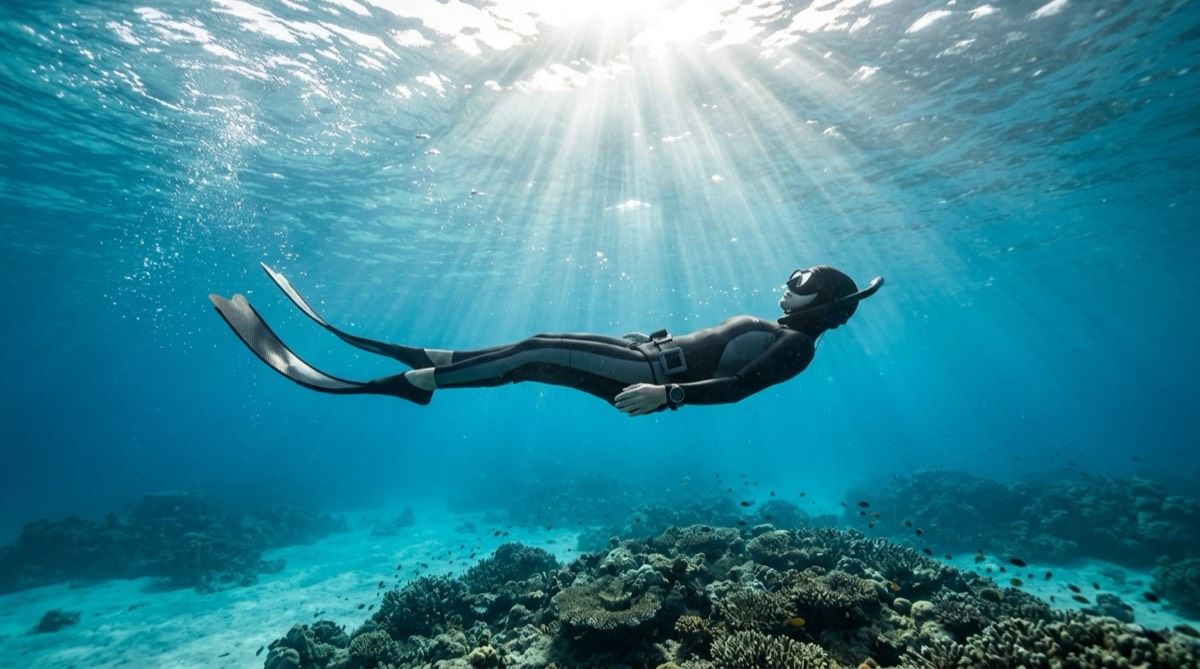
Freediving is often portrayed in movies and media as an extreme sport for adrenaline junkies pushing themselves to dizzying depths. But for the vast majority of people who take it up, learning to freedive isn't about chasing world records. It’s about building an unbreakable foundation of water safety.
Whether you’re a surfer, a scuba diver, a casual snorkeler, or someone trying to overcome a fear of the ocean, the skills you learn in a beginner freediving course can literally save your life. Here is how holding your breath fundamentally changes your ability to survive and thrive in the water.
1. Developing Unbreakable Composure
Panic is a major factor in many water accidents and drownings. When a swimmer is caught in a rip current, or a surfer experiences a heavy hold-down, the brain's default "fight or flight" response instantly kicks in. Heart rate spikes, muscles tense, and the immediate reaction is to thrash and gasp for air.
Freediving rewires this exact response. Through controlled breath-hold training, you learn to recognize the physiological urge to breathe and—more importantly—you learn how to remain perfectly calm despite it. You train your brain to realize that the urge to breathe does not mean you are out of oxygen. This unbreakable water composure means that if you ever face a real breath-hold emergency, your default reaction will be relaxation instead of panic.
2. Breath Awareness and Efficiency
When things go wrong in the ocean, oxygen becomes your most precious resource. Most people have no idea how quickly their bodies consume oxygen when stressed, or how to maximize the air they already have in their lungs.
Freediving teaches you the mechanics of your own respiratory system. You learn proper diaphragmatic breathing to take in the maximum amount of air, and you learn how to move with extreme hydrodynamic efficiency to avoid wasting it. If you take a bad fall off a boat, get held down by a wave or lose your snorkel in rough water, you won't burn through your oxygen reserve by panicking. You will know how to conserve it and reach the surface calmly.
Important for scuba divers: freediving breath-hold skills do not replace scuba training. During an emergency ascent on scuba, you must keep exhaling—holding your breath while ascending after breathing compressed air can cause a serious lung overexpansion injury.
3. Activating Your Built-In Safety Net
Humans are inherently designed for the water. When you hold your breath and submerge your face in water, your body triggers the Mammalian Dive Reflex. This evolutionary trait automatically lowers your heart rate (bradycardia) and redirects blood flow from your extremities to your vital organs (peripheral vasoconstriction).
Freedivers train to consciously trigger and strengthen this reflex. By understanding and utilizing this built-in safety net, your body becomes incredibly efficient at surviving underwater on a single breath, protecting your brain and heart when oxygen levels drop.
4. The "Never Dive Alone" Rule
One of the most profound ways freediving can save your life has nothing to do with holding your breath. It comes down to the sport's golden rule: Never dive alone.
Freediving is built entirely around the buddy system. You are trained to constantly monitor your dive partner, recognize the subtle signs of hypoxia (low oxygen), and execute specific rescue protocols if something goes wrong. You also learn why hyperventilating before a dive is so dangerous—a mistake many snorkelers and spearfishers make without knowing it.
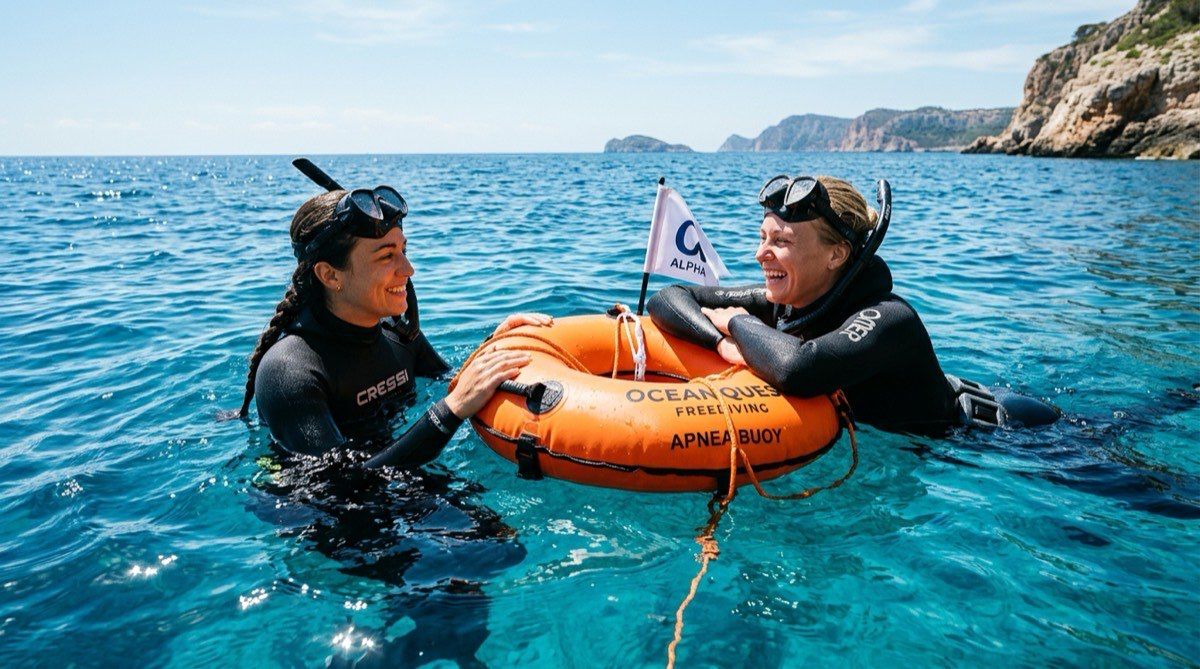 This strict safety culture builds a habit of extreme situational awareness. You stop taking the ocean for granted. This safety-first mindset inevitably bleeds into every other aquatic activity you do, making you a vastly safer swimmer, surfer, and overall waterman.
5. 'Blue Therapy' and Saving Your Mental Health
The life-saving benefits of freediving aren't strictly physical. We live in a high-stress, fast-paced world where chronic anxiety takes a massive toll on long-term health.
The breathing techniques used in freediving—specifically prolonged, controlled exhalations—directly stimulate the parasympathetic nervous system. This lowers cortisol levels and naturally reduces stress. Because you cannot safely hold your breath while your mind is racing with daily worries, freediving forces you to be completely, 100% present in the moment.
For many, this acts as a powerful form of "Blue Therapy." By giving your nervous system a regular reset, freediving offers a quiet refuge from the noise of modern life. We explore the science in our article on freediving for mental health.
Ready to Transform Your Relationship with the Water?
Freediving is the ultimate survival skill masked as an extreme sport. If you want to overcome your fears, become a safer ocean explorer, and learn what your body is truly capable of, the best time to start is now.
Join us for a Wave 1 Beginner Freediving Course in Phuket, or go further with our freediving rescue workshop, and learn these life-saving skills in a safe, controlled, and beautiful environment.