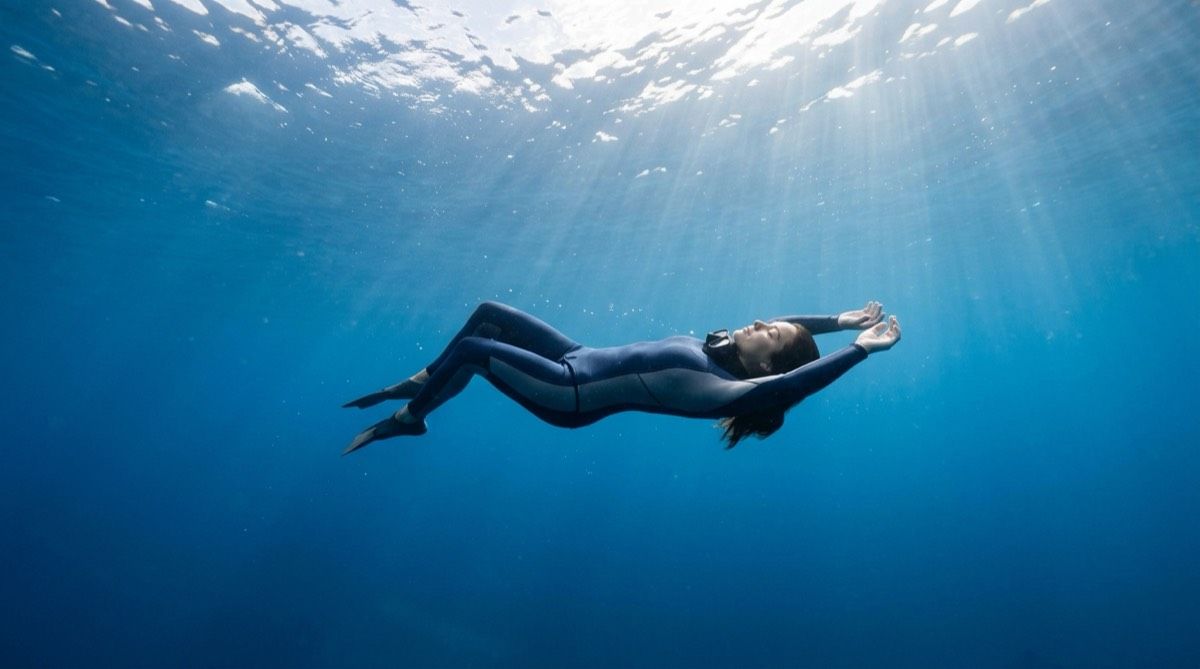
When most people think of freediving, they picture extreme athletes pushing their bodies to the absolute limit in deep, dark oceans. But there is a quieter, much more powerful side to the sport that is drawing thousands of people to the water: mental health.
In recent years, psychologists and wellness experts have begun exploring the profound mental benefits of what is increasingly being called "Blue Therapy." Freediving, as it turns out, is the ultimate form of underwater meditation.
Here is the science behind why holding your breath can help you manage anxiety, reset your nervous system, and find a sense of peace that is hard to achieve on land.
The Parasympathetic Nervous System
The foundation of freediving is relaxation. You cannot physically hold your breath for a long time if your body is tense and your heart is racing.
To prepare for a dive, freedivers use specific breathing techniques—usually characterized by inhaling deeply into the diaphragm and exhaling very slowly. This extended exhalation sends a direct signal through the vagus nerve to the parasympathetic nervous system (your body's "rest and digest" mode).
Within minutes of starting this breathing cycle, your heart rate slows down, your blood pressure drops, and levels of cortisol (the primary stress hormone) begin to fall. Before you even put your face in the water, your body has shifted into a calmer state. You can learn these techniques in our guide to freediving breathing.
The Mammalian Dive Reflex
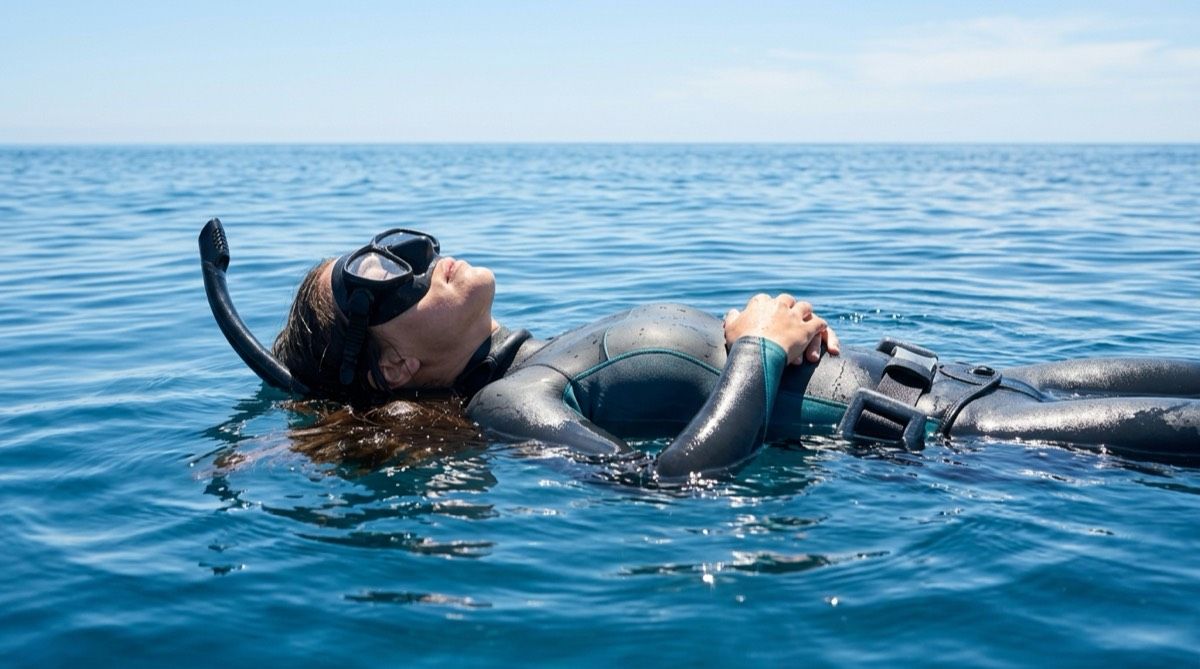
Once you submerge your face, biology takes over. The Mammalian Dive Reflex is an evolutionary trait triggered by water touching the receptors on your face (cooler water makes it stronger).
This reflex instantly lowers your heart rate further (bradycardia) to conserve oxygen. It is a deeply grounding physical sensation. Many divers describe the moment they begin their descent as a "switch" turning off in their brain. The noise of the world above disappears, replaced by the rhythmic sound of the ocean and the slow beating of their own heart.
Forced Mindfulness
In a world filled with endless notifications, emails, and daily anxieties, true mindfulness—the act of being completely present in the current moment—is incredibly difficult to achieve.
Freediving provides forced mindfulness. When you are 15 meters underwater on a single breath, you simply cannot worry about the email you forgot to send your boss. If your mind wanders to stressful thoughts, your heart rate spikes, you burn through your oxygen, and the dive ends prematurely.
To dive well, you must be present. You must scan your body for tension, focus on the sensation of the water gliding past your skin, and accept the gentle pressure of the deep. Many people who deal with chronic anxiety or a restless mind find this forced state of total presence incredibly liberating. It is a rare break from the mental chatter.
Conquering the Urge to Breathe
One of the most powerful mental health benefits of freediving is learning how to deal with discomfort.
During a breath-hold, carbon dioxide builds up in your blood. This triggers a physiological response—your diaphragm contracts, sending a strong signal to your brain that says, "You need to breathe right now." It induces a mild state of panic.
In a beginner freediving course, you learn that this urge to breathe is just an alarm bell. It does not mean you are out of oxygen; it just means CO2 is rising. You learn to observe this panic, accept it, and relax into it rather than fighting it.
This skill translates directly to daily life. When a panic attack or a moment of severe anxiety hits on land, the physical sensations are very similar. Because freedivers have trained their brains to remain calm while alarms are ringing in their bodies, they are often much better equipped to ride out moments of intense stress in their everyday lives.
Discover Your Own Blue Therapy
You do not need to dive 50 meters deep to experience the mental health benefits of freediving. The physiological and psychological reset happens even in the top few meters of the ocean, or simply floating in a swimming pool.
If you are looking for a way to disconnect, lower your stress levels, and discover a new level of mental resilience, the ocean is waiting for you. Try a relaxed first freediving session or join a Wave 1 Beginner Freediving Course and experience the calming power of a single breath. If yoga is already part of your routine, read how it pairs with freediving and yoga.
Freediving is not a replacement for professional mental health care. If you live with panic disorder, severe anxiety or a heart condition, talk to your doctor before starting breath-hold training.