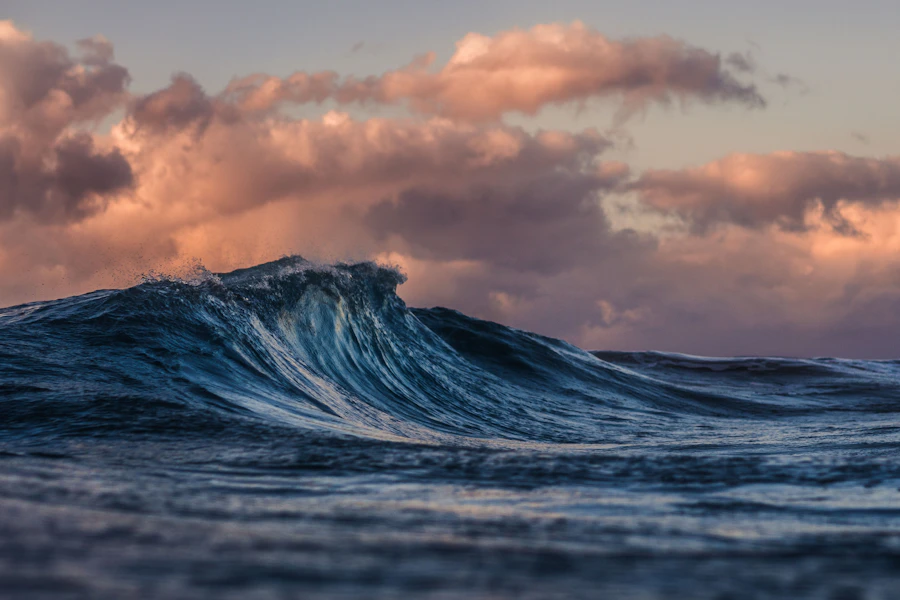
History of Freediving
The Ocean Within Us
A journey through centuries of human desire to return to the cradle of life — on a single breath.
Why Humans Dive
For over six thousand years, humans have been diving on a single breath. Long before sport, before records, before science — there was survival. Ancient civilizations from Mesopotamia to Polynesia relied on breath-hold diving to harvest pearls, sponges, and shellfish from the ocean floor.
Ancient Record
The Epic of Gilgamesh (2000 BCE) describes a dive to retrieve a thorny plant from the sea floor — one of the oldest written references to breath-hold diving in human history.
Sea Women: Ama & Haenyeo
For over two thousand years, the women divers of Japan (Ama) and Korea (Haenyeo) have been harvesting the sea on a single breath. Diving without any equipment to depths of 25 meters, they represent the longest continuous tradition of breath-hold diving on Earth.
The sea is not a workplace. It is a temple where you must enter with respect.
Ama diver proverb, Toba, Japan
The Stone Riders
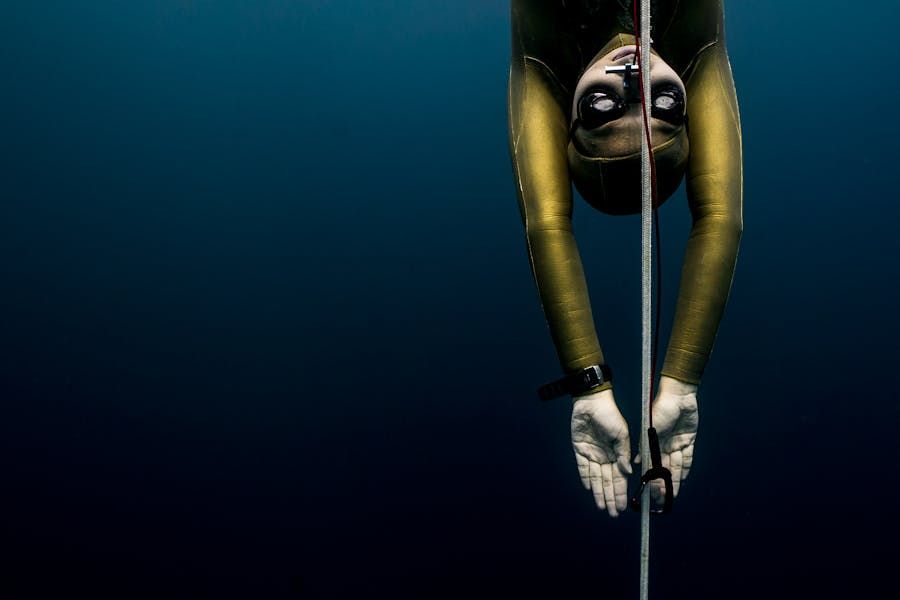
Greek sponge divers of the Aegean developed the Skandalopetra — a flat stone weighing 15 kg that pulled them into the depths feet-first. This technique, practiced for over 2,000 years on the islands of Kalymnos and Symi, is the direct ancestor of modern No Limits freediving.
1913. The Italian battleship Regina Margherita loses her anchor at 83 meters. No helmeted diver can reach it. A wiry sponge fisherman named Stathis Hatzis grips a skandalopetra between his legs and disappears into the darkness for three and a half minutes. He finds the anchor. The doctors refuse to believe him, but history remembers his name.
Stathis Hatzis, Karpathos, Aegean Sea, 1913
The Birth of a Sport
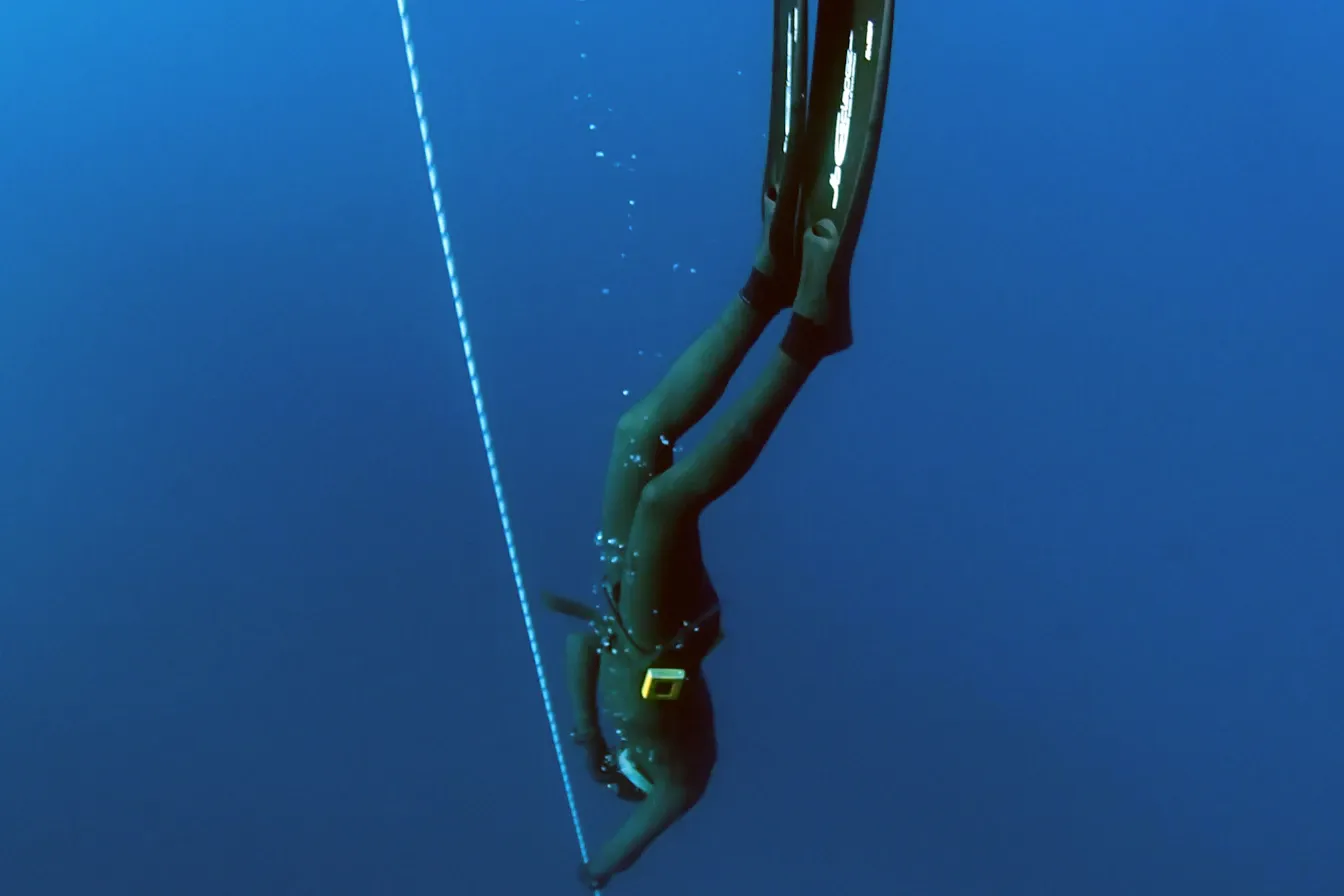
In 1949, Hungarian-born Italian air force captain Raimondo Bucher made a bet worth 50,000 lire. He claimed he could reach 30 meters on a single breath. At the cliffs of Capri, before skeptical judges, he dove — and surfaced with the first official depth record in history. No federation, no rules, no safety. Just one man, one breath, and one bet that invented competitive freediving.
Did you know?
The 50,000 lire Bucher wagered was roughly equal to an average Italian annual salary in 1949.
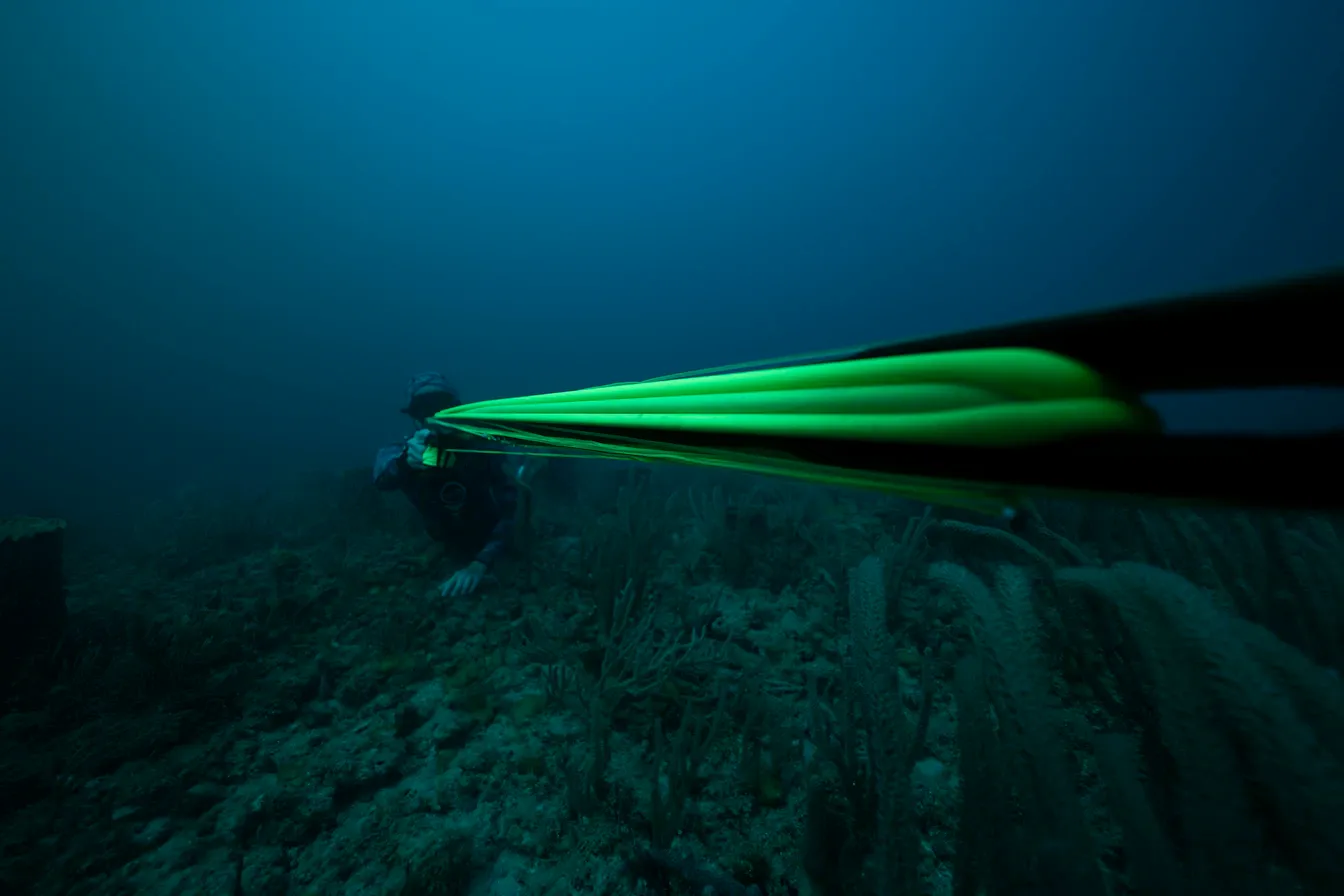
The Wall of Fear
In the 1950s, medical science declared a hard limit: below 50 meters, water pressure would crush the human chest. Two men decided that limits exist only in the mind.
Enzo Maiorca
The Fire of Sicily
Passionate, fierce, proud. Maiorca attacked the deep with Mediterranean fury. He set his first record of 45m in 1960 and would spend decades pushing the boundary.
Jacques Mayol
The Zen of the Deep
Philosopher, yogi, dolphin whisperer. Mayol didn't fight the ocean — he became part of it. His approach revolutionized not just the sport, but our understanding of human physiology.
The Physiological Limit
Scientists calculated that at 50 meters (6 atmospheres), the lungs would compress below residual volume. The math was correct. The conclusion was wrong. They didn't know about blood shift — the body's extraordinary ability to flood the chest cavity with plasma, creating an internal pressure suit.
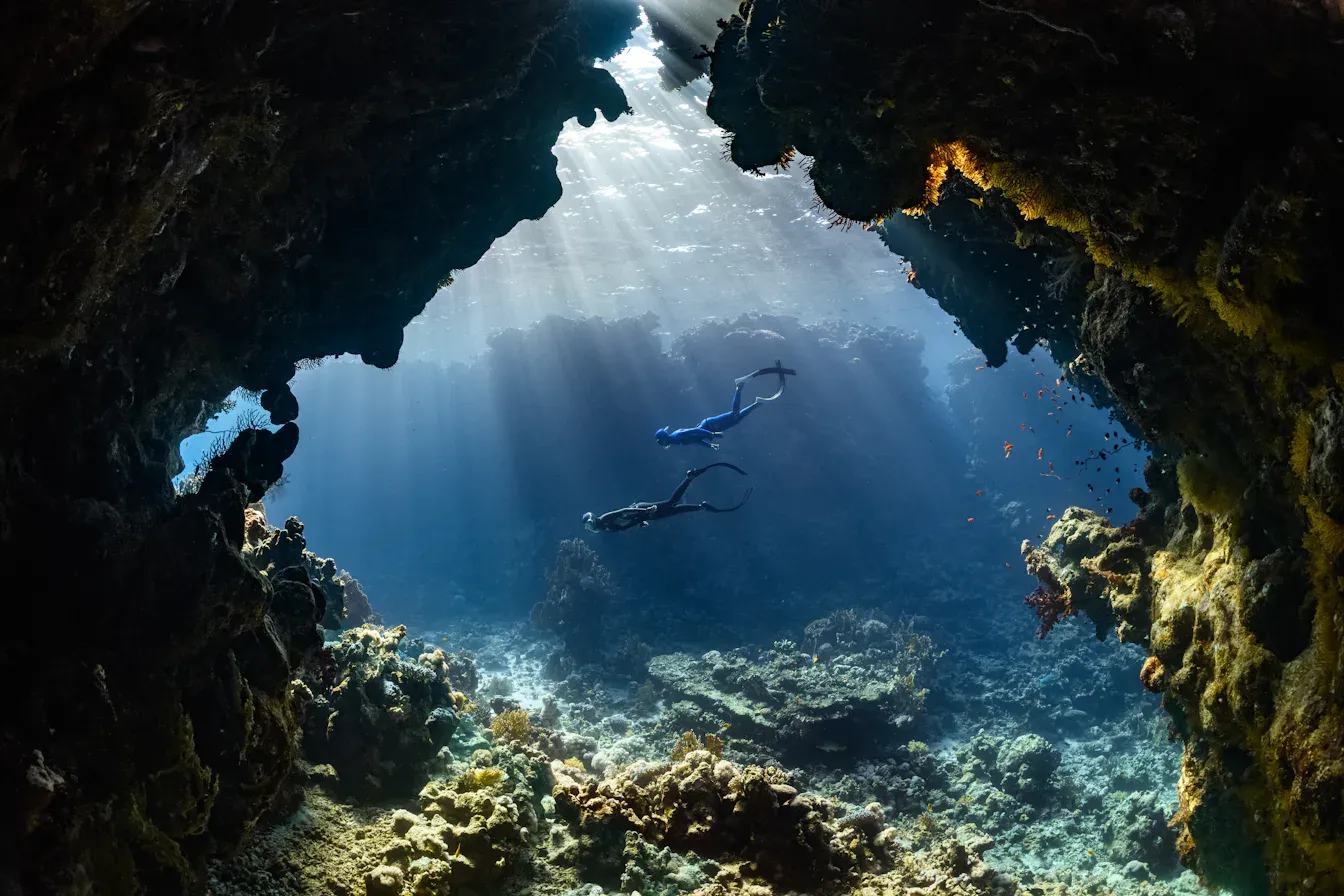
The Blue Abyss
On November 23, 1976, off the coast of Elba, Jacques Mayol descended to 100 meters on a single breath. Scientists had declared it impossible — the lungs would collapse, the body would fail. Instead, they documented the blood shift: the body's ancient reflex that shunts blood from limbs to chest, protecting organs from crushing pressure. Mayol didn't just break a record. He proved humans were built for the deep.
Blood Shift
The mammalian dive reflex causes blood plasma to fill the lungs at extreme depth, preventing them from collapsing. This was first documented during Mayol's 100m dive.
Mayol later wrote 'Homo Delphinus: the Freediver,' arguing humans evolved as aquatic mammals. The theory was controversial but revolutionary — it changed how the world saw human potential.
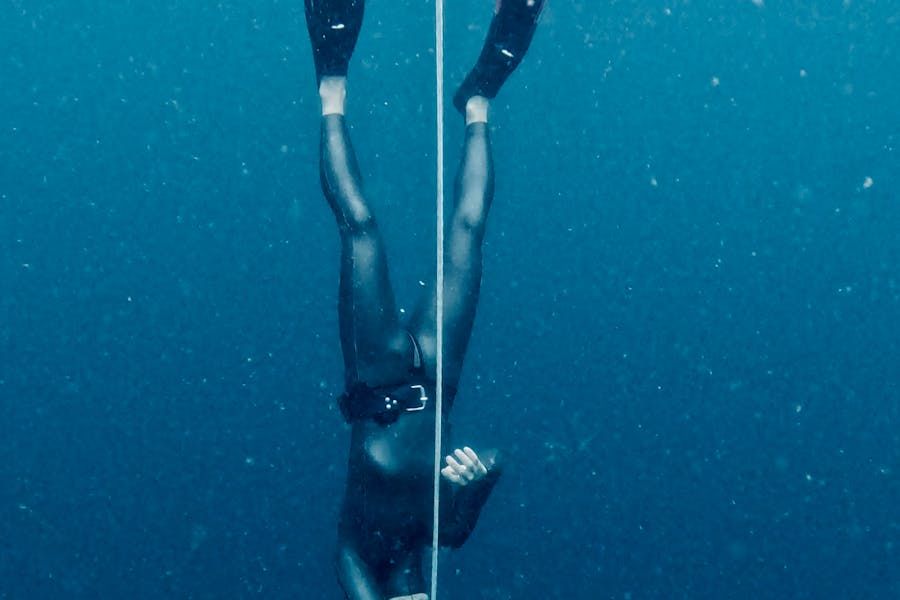
Le Grand Bleu
In 1988, Luc Besson released 'The Big Blue' — a romanticized retelling of the Maiorca-Mayol rivalry. The film became a cultural phenomenon in Europe, with 9 million viewers in France alone. It showed audiences a world they had never imagined: the silence of the deep, the addiction to depth, the thin line between ecstasy and death. A generation of freedivers trace their beginning to this single film.

Film Impact
After The Big Blue, freediving club memberships across Europe increased by over 300%. The film is still considered the most influential piece of media about the sport.
The Queen of the Deep
Natalia Molchanova didn't start freediving until she was 40. Within years she had rewritten every record book: 41 world records, 23 gold medals at World Championships, inventor of the Deconcentration of Attention technique. She wasn't just the best female freediver ever — many consider her the greatest freediver of all time, male or female.
On August 2, 2015, during a recreational dive near Formentera, Spain, Natalia disappeared. She was 53. A deep current likely carried her beyond reach. Her body was never found. The ocean kept its queen.
Freediving is not a sport. It is a way to discover who we truly are.
— Natalia Molchanova
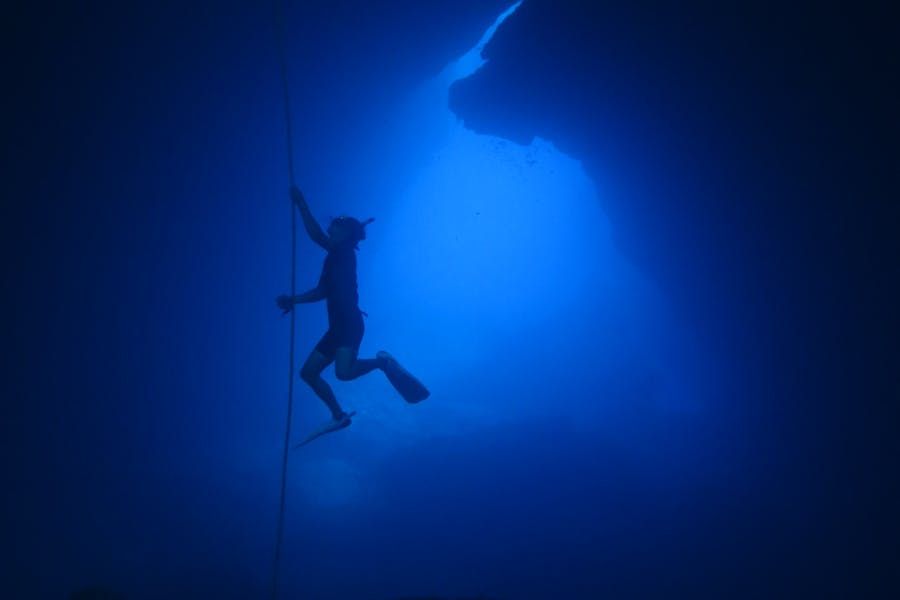
No Limits
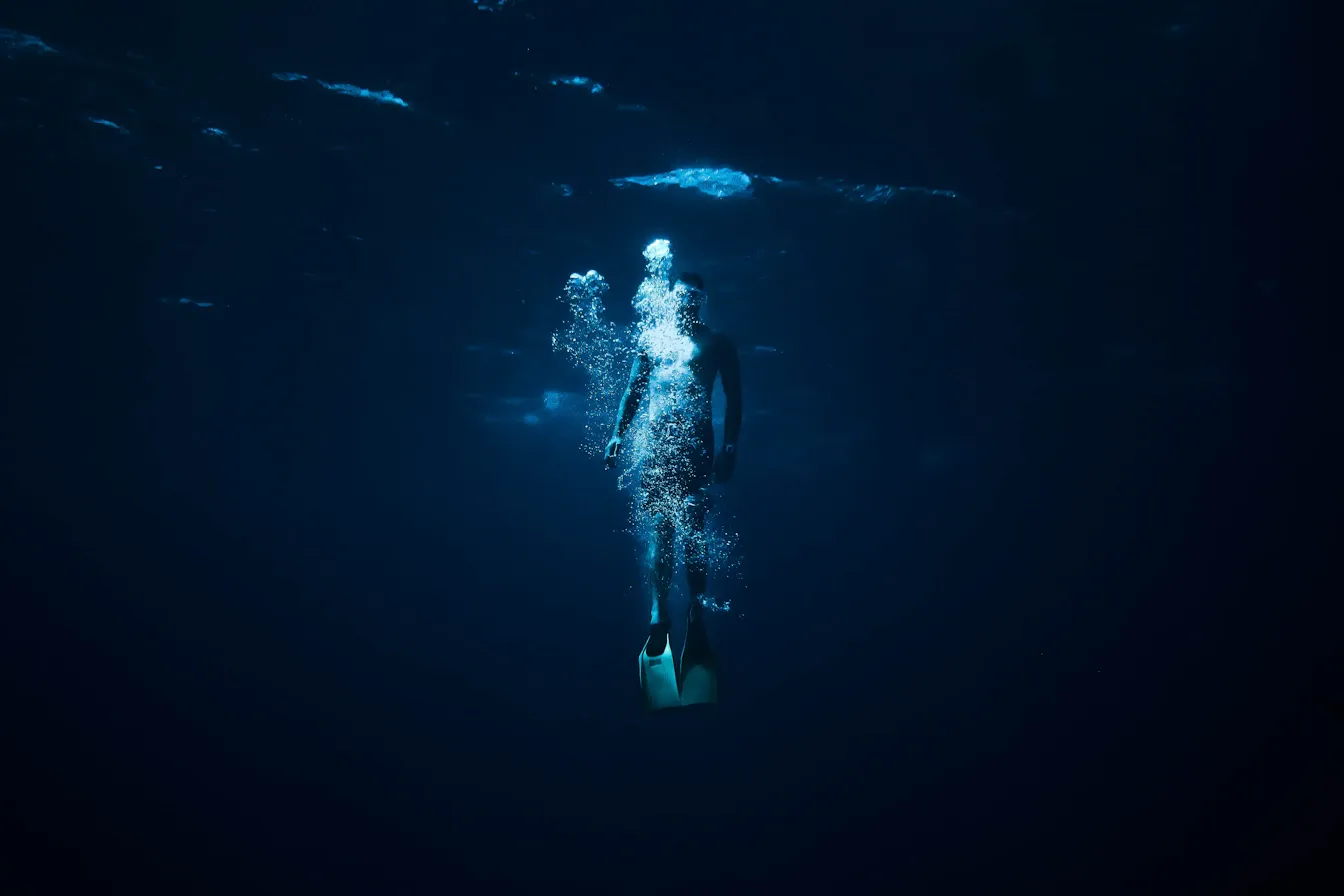
Herbert Nitsch holds the deepest freedive ever recorded: 214 meters in No Limits discipline, set in 2007. The Austrian, known as 'the deepest man on earth,' set 33 world records across all eight disciplines — more than any other freediver in history.
In 2012, Nitsch attempted 253 meters in Santorini. He reached the depth but suffered severe decompression sickness on ascent. Multiple brain strokes. Doctors said he would never walk again. Through years of rehabilitation, Nitsch recovered and returned to the water. He still dives today.
93m
96m
214m
330m
Modern Heroes
Freediving today is a global sport with standardized rules, safety protocols, and athletes pushing beyond what was thought possible.
Alexey Molchanov
Son of Natalia. 28+ world records. CWT 136m. President of CMAS Freediving. Carries his mother's legacy while rewriting every record she set.
Arnaud Jerald
French prodigy. CWT Bi-Fins 123m. Youngest male to break 100m. Known for explosive power and calm precision.
Alenka Artnik
Slovenian record-breaker. CWT 122m (women). Pushed the female absolute depth barrier further than any woman before.
Current World Records
| Discipline | Men | Women |
|---|---|---|
| CWT | 136m | 122m |
| FIM | 131m | 102m |
| CNF | 102m | 78m |
| STA | 11:35 | 9:02 |
Your Body is a Masterpiece
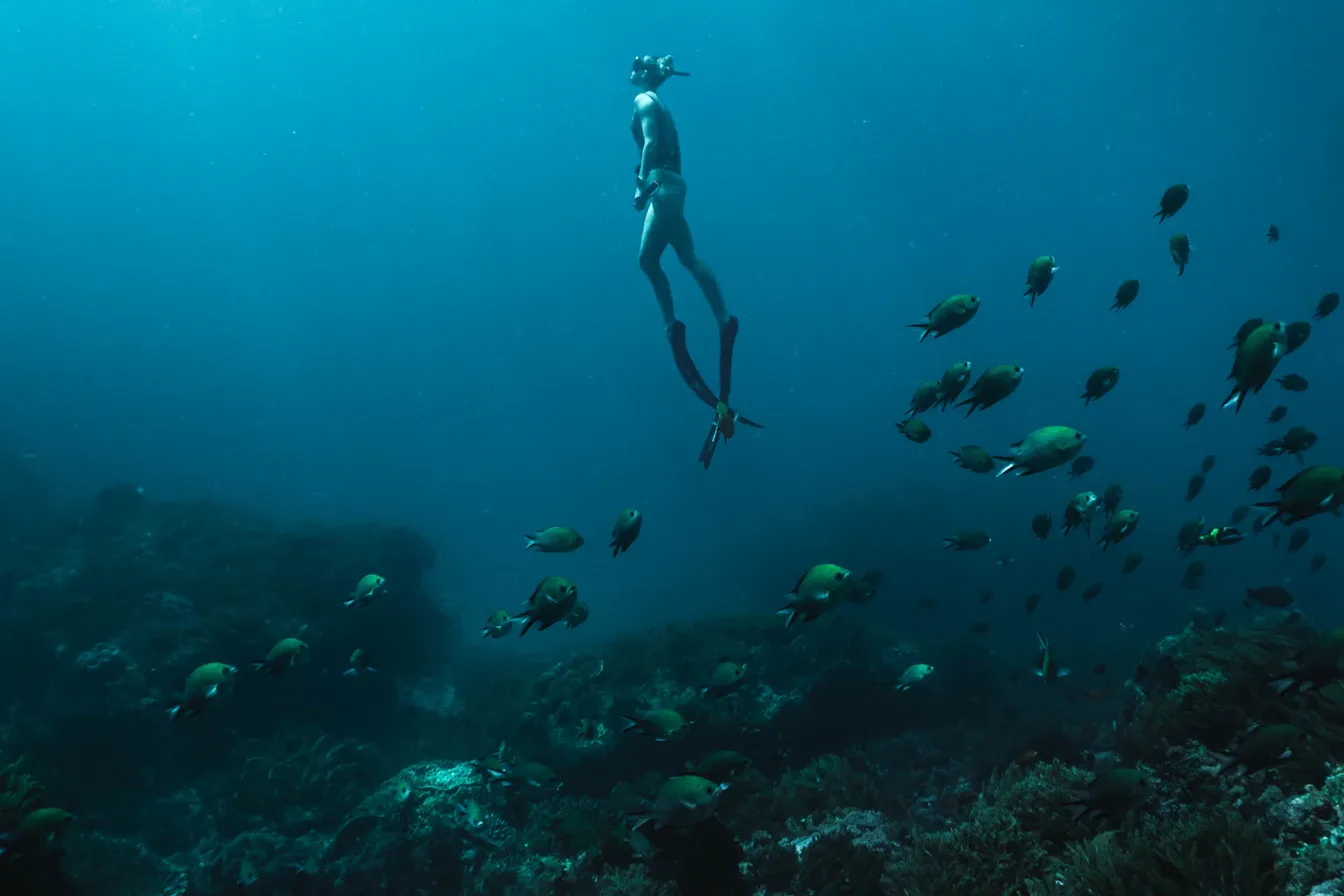
Every human carries ancient adaptations for diving. The moment your face touches cold water, a cascade of reflexes activates — no training required. Freediving merely awakens what evolution gave us.
Bradycardia
Heart rate drops 10-25% on facial immersion. Trained divers reach 20-30 BPM — half a resting rate.
Vasoconstriction
Blood vessels in extremities constrict, redirecting blood to vital organs — heart, lungs, brain.
Blood Shift
Below 40m, blood plasma floods lung capillaries, preventing collapse at pressures that would crush rigid structures.
Splenic Contraction
The spleen releases stored red blood cells, boosting oxygen capacity by up to 9%.
Genetic Adaptation
The Bajau people of Southeast Asia have evolved spleens 50% larger than neighboring populations, giving them a measurable advantage in breath-hold diving. Natural selection for freediving — in the 21st century.
Freediving Today: A Global Movement
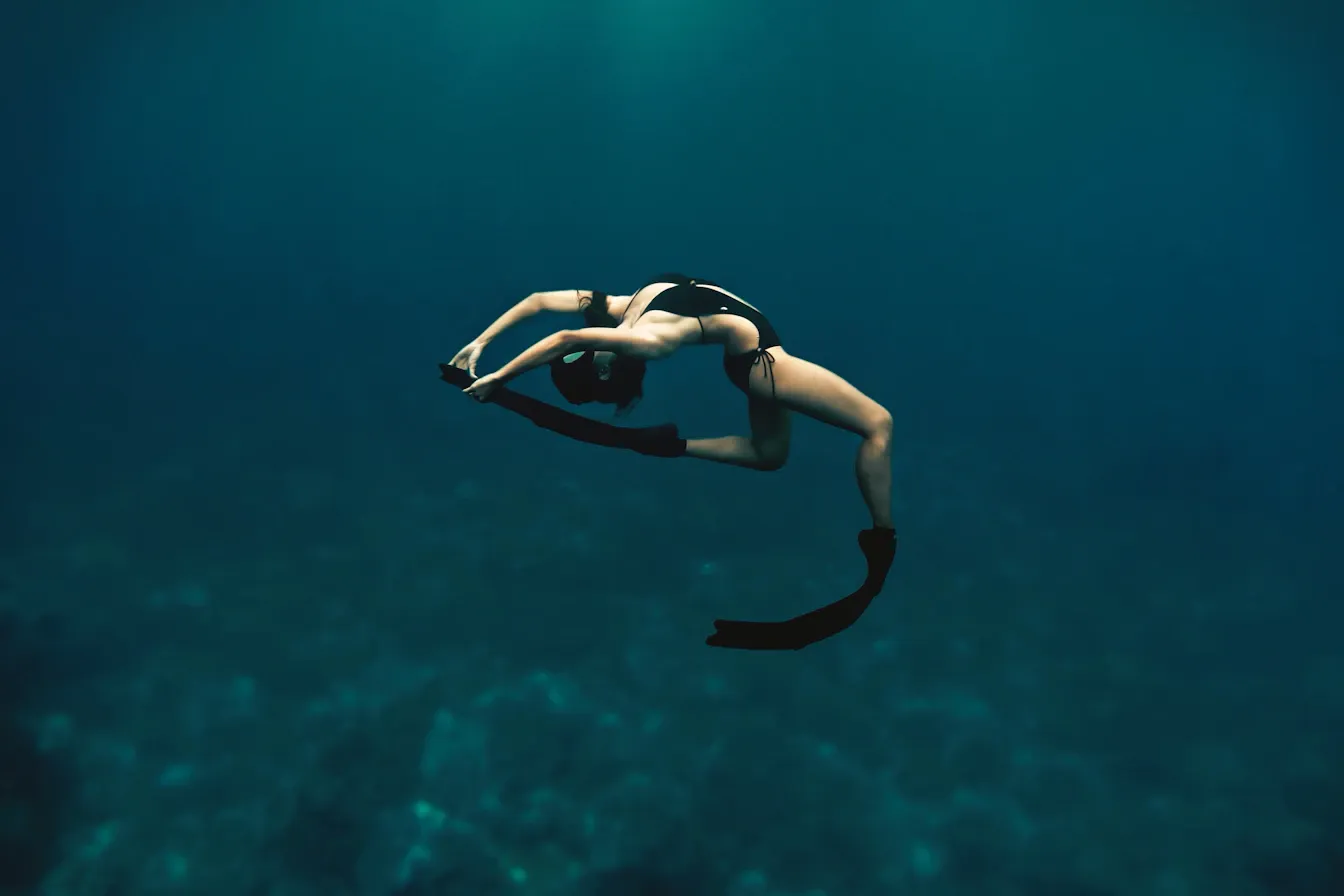
What began as survival has become one of the world's fastest-growing water sports. AIDA International, Molchanovs Education System, and PADI Freediver have made breath-hold diving accessible to anyone with a mask and a willingness to listen to their body.
Top destinations: Dahab (Egypt), Dean's Blue Hole (Bahamas), Kalamata (Greece), Koh Tao (Thailand), and — Phuket.
Phuket offers warm water year-round, world-class visibility, and coral reefs minutes from shore. ORO Freediving School is your gateway to the deep.
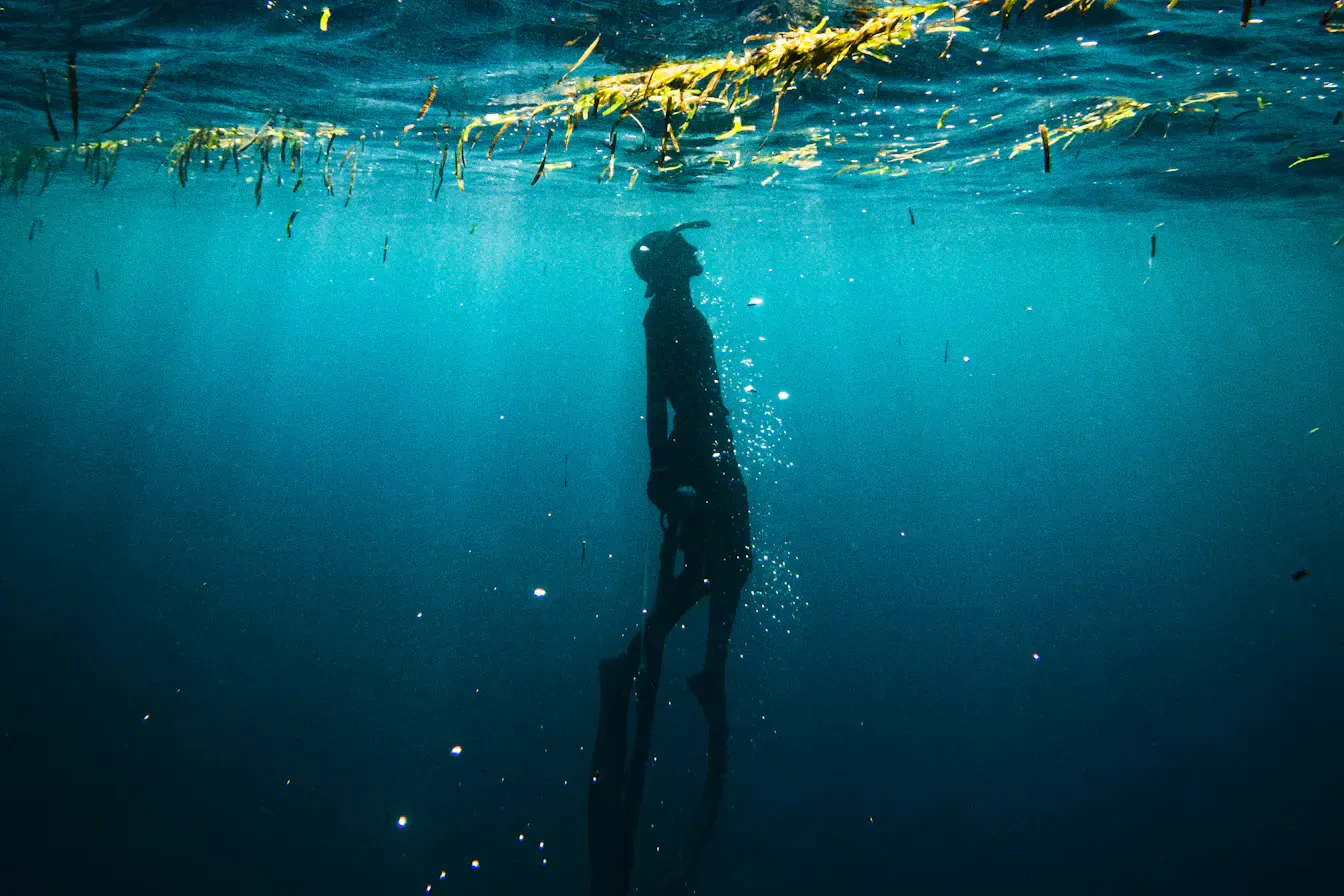
Why Do We Dive?
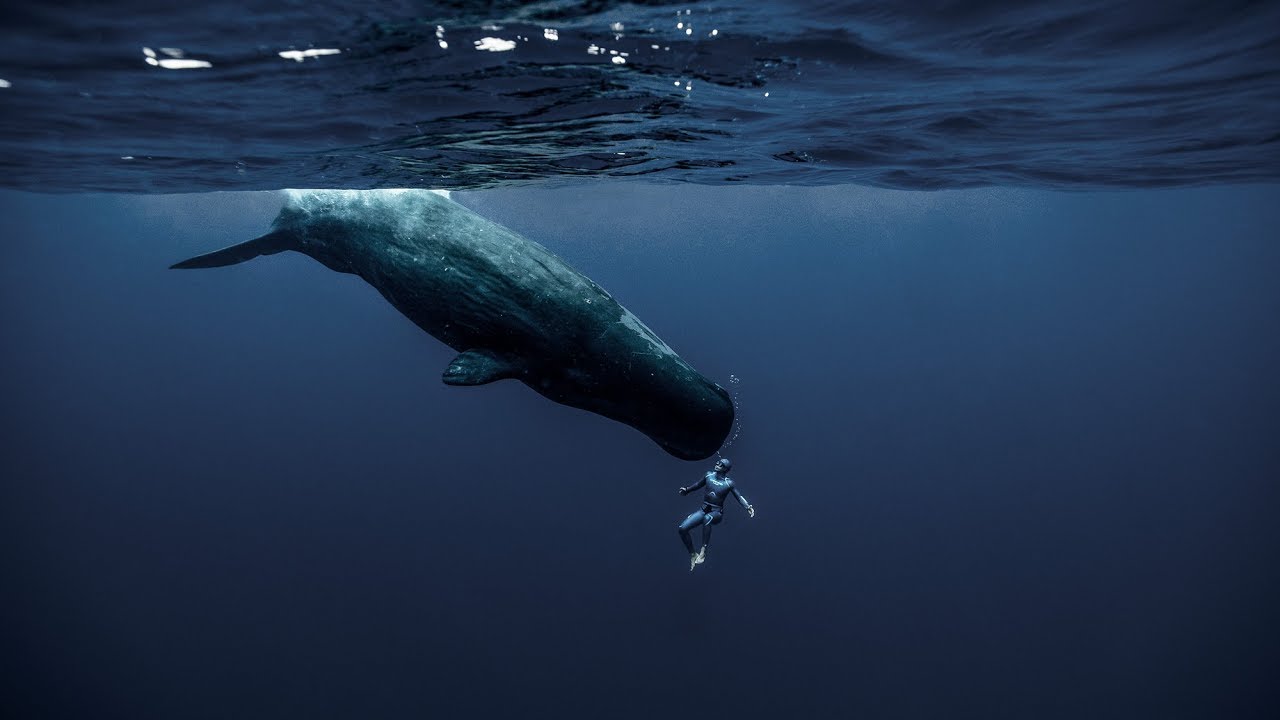
Not for records. Not for likes. We dive because there is a silence at depth that no surface experience can replicate. A silence that reveals who we are when stripped of everything — air, light, sound. The ocean doesn't care about your job, your plans, your fears. It only asks one question: can you let go?
Begin Your JourneyEvery freediver started with a single breath.