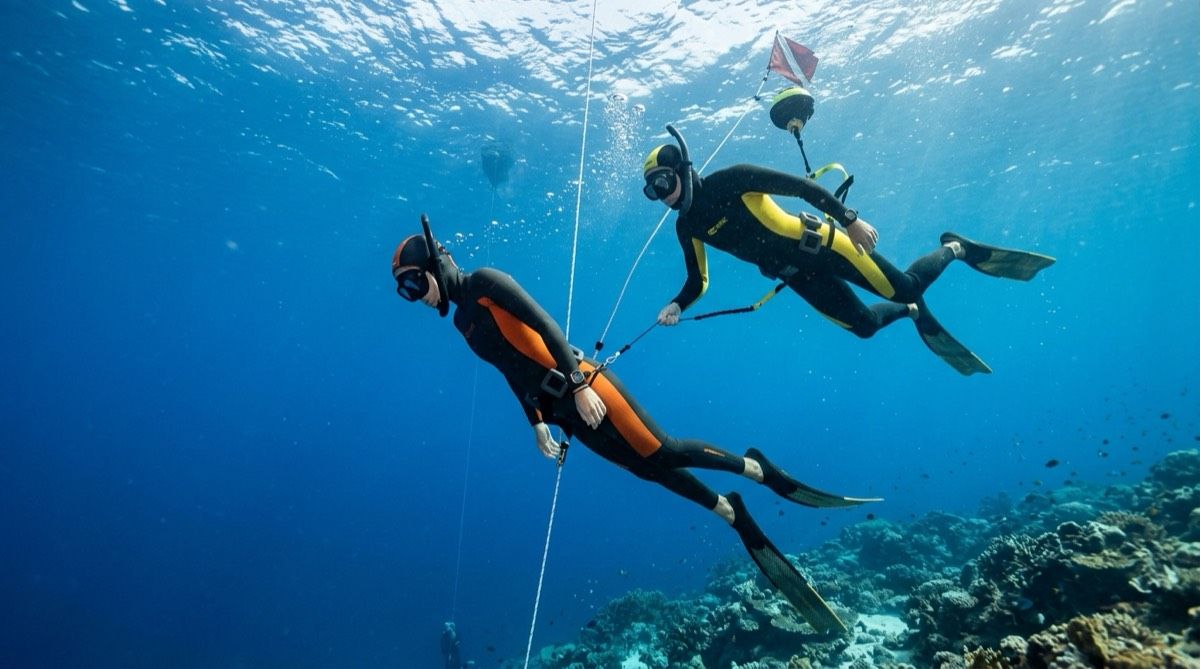
When Netflix released the hit documentary The Deepest Breath, it captivated millions around the world. The stunning underwater cinematography and the emotional story of champion freediver Alessia Zecchini and safety diver Stephen Keenan brought the sport into the mainstream spotlight.
However, it also left many viewers with a lingering, terrified question: Is freediving incredibly dangerous?
If your only exposure to freediving is through documentaries about world-record attempts, it is easy to assume that every dive is a brush with death. But the reality of recreational freediving is vastly different. Here is what Netflix didn't tell you about the safety of our sport.
Extreme Competition vs. Recreational Diving
To understand the risks shown in The Deepest Breath, you have to understand the difference between competitive freediving and recreational freediving.
Think of it like driving a car. Competitive freedivers are the Formula 1 drivers of the ocean. They are pushing the absolute physiological limits of the human body, diving well past 100 meters (330 feet) on a single breath to break world records. At that elite level, the margins for error are incredibly small, and the risks are real.
Recreational freedivers, on the other hand, are just taking a scenic drive down the coast. When you take a beginner course or go fun-diving on a reef in Phuket, you are diving to comfortable depths (usually between 10 to 20 meters). You are not pushing yourself to the point of exhaustion; you are exploring the underwater world, swimming with turtles, and enjoying the feeling of weightlessness. When practiced within your limits, recreational freediving is incredibly safe.
The Truth About Blackouts
The documentary heavily featured "blackouts" (Loss of Motor Control or LMC, and full loss of consciousness). A blackout happens when oxygen levels in the brain drop too low (hypoxia), causing the brain to temporarily shut off to protect itself. It looks terrifying on screen.
What you need to know is that blackouts are largely avoidable. They usually happen when divers ignore their body's warning signs and push past their limits—something elite athletes do to win medals, but recreational divers should never do. Another common cause is hyperventilating before a dive, which hides the urge to breathe until oxygen is already dangerously low.
In a recreational setting, if you follow the rules, dive within your limits, and listen to your body, your risk of a blackout is very low.
The Golden Rule: Never Dive Alone
Even though blackouts are rare in recreational diving, the sport has a failsafe system built into its core: The Buddy System.
The absolute golden rule of freediving is that you never, ever dive alone. If you dive with a trained buddy, even in the extremely unlikely event that you push too hard and black out near the surface, your buddy is right there. A trained freediver knows exactly how to bring you to the surface, support your airway, remove your mask and use the "blow, tap, talk" protocol to help you recover within seconds.
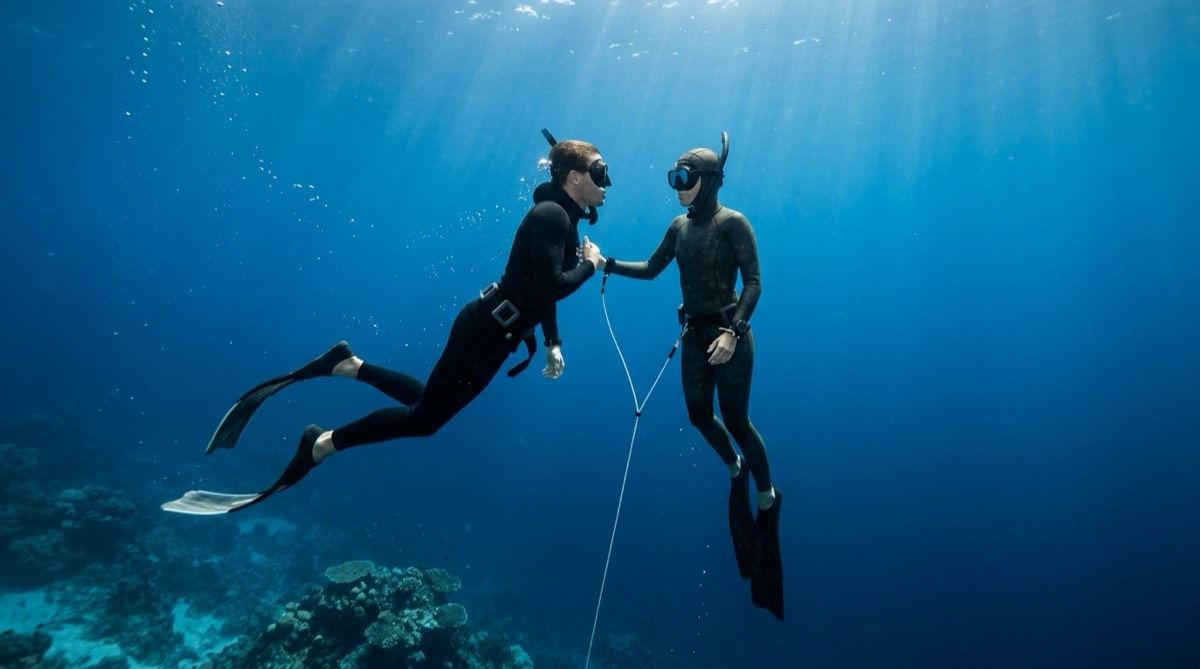
Because of the buddy system, what could be a fatal accident if you were alone becomes a minor, quickly resolved incident. This is why proper education is so vital. Our freediving safety rules explain the "one up, one down" system in detail.
Safety First at Freediving Phuket
At Freediving Phuket, our courses are not about creating extreme athletes; they are about creating safe, confident ocean explorers.
- Conservative Limits: We never force students to hit a specific depth if they aren't comfortable. We focus on technique and relaxation, not numbers.
- Certified Instructors: You are always under the direct supervision of highly trained professionals who act as your safety divers.
- Education: We spend significant time in the classroom and the pool teaching you rescue protocols, so you know exactly how to protect yourself and your dive buddy.
The Verdict
Is freediving dangerous? Like any adventure sport—from rock climbing to skiing—it has inherent risks. Many common fears are simply freediving myths. But when you strip away the extreme competitive element shown on Netflix and focus on the recreational reality, freediving is a remarkably safe, peaceful, and transformative activity.
Don't let the movies scare you away from the ocean. Start with a first freediving session or join a Wave 1 Beginner Course and learn how to freedive the safe, responsible, and relaxing way.