When preparing for a freediving session, most beginners focus entirely on stretching their lungs and practicing their breath-holds. But there is another major factor that will dictate whether you have a relaxed, deep dive or a frustrating, short one: your stomach.
Digestion requires oxygen and energy. If your body is busy breaking down a heavy meal, that is oxygen you cannot use to hold your breath. Furthermore, certain foods can directly block your sinuses, making equalization (clearing your ears) much harder.
Whether you are preparing for a fun dive in Phuket or stepping into a Wave 1 Beginner Course, here is exactly what you should eat—and avoid—before hitting the water.
The Pre-Dive Meal: Light and Energizing
The goal of a pre-dive meal is to give you enough energy to swim and stay warm, without triggering heavy digestion. You should aim to eat your pre-dive meal at least 2 hours before you get in the water.
What to eat:
- Simple Carbohydrates: These break down quickly and provide accessible energy.
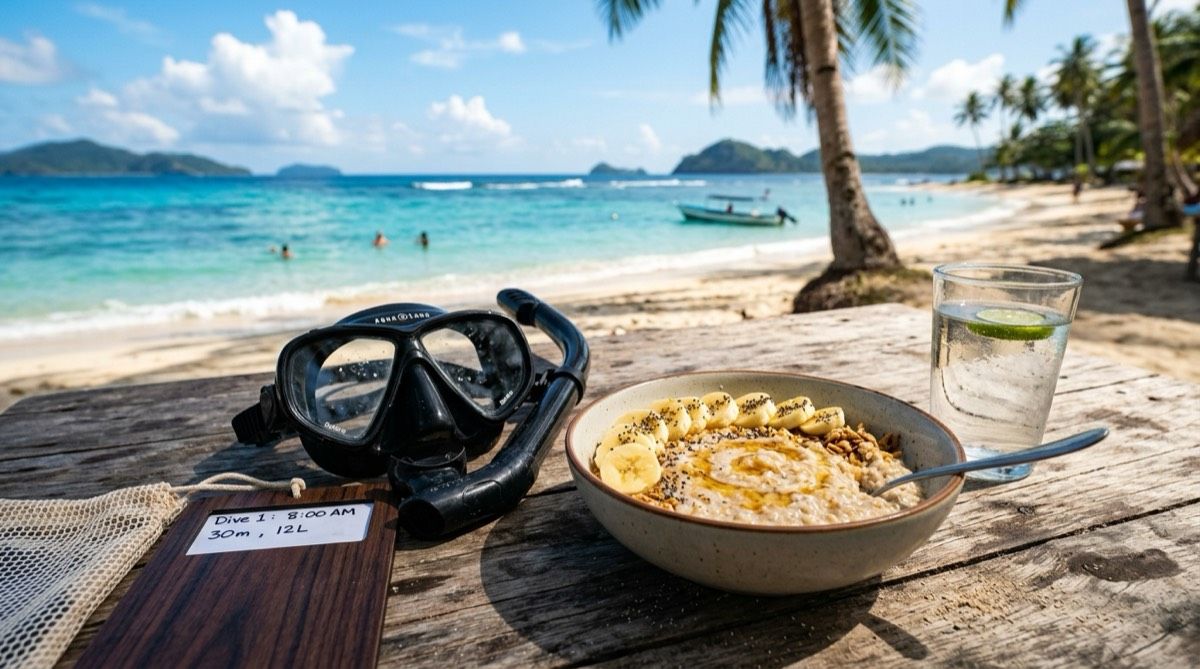
- Oatmeal / Porridge: A classic freediver favorite. It provides sustained energy without sitting heavily in the stomach. (Make it with water or plant milk, not dairy).
- Bananas: Easy to digest and packed with potassium, which helps prevent muscle cramps while finning.
- Toast with Honey or Jam: A quick, light snack if you are diving early in the morning and don't have a big appetite.
Foods to Absolutely Avoid
Eating the wrong thing before a dive can ruin your session. Avoid these at all costs:
- Dairy (Milk, Cheese, Yogurt): The most common rule in freediving nutrition. Many divers find that dairy leaves them with thicker mucus, which can clog the sinuses and Eustachian tubes and make it difficult (or painful) to equalize your ears. The science is mixed, but if you struggle to equalize, cutting dairy before a dive is an easy experiment.
- Heavy Proteins and Fats (Bacon, Steak, Fried Food): These take hours to digest. Your body will redirect oxygen-rich blood to your stomach to process the heavy food, completely ruining your breath-hold times.
- Spicy Foods: Diving upside down increases the chance of acid reflux. Spicy foods will give you severe heartburn when you are inverted on the line.
- Coffee and Caffeine: While a morning coffee is a ritual for many, caffeine increases your heart rate, makes you feel jittery and acts as a mild diuretic. A high heart rate burns oxygen faster and makes it harder to relax.
Hydration Rules
Hydration is critical for freedivers. Dehydration thickens your blood (making it harder for oxygen to circulate) and thickens your mucus (making equalization harder). However, you have to balance hydration with the diuresis effect.
When you get in the water, the pressure of the water around your body (and the cooling of your skin) pushes blood from your limbs toward your chest. Your body reads this as "too much fluid" and responds with immersion diuresis, which makes you need to pee. If you chug a liter of water right before diving, you will spend the entire session needing a bathroom break.
The Strategy: Hydrate consistently the day before your dive. On the morning of the dive, drink water steadily, but stop chugging fluids about 45 minutes before you get in the water.
To Fast or Not to Fast?
You might hear about advanced freedivers fasting (diving on a completely empty stomach) before attempting deep record dives. While this is a real technique used by elite athletes to minimize oxygen consumption, beginners should not fast.
When you are learning, you are burning a lot of calories just swimming around, staying warm, and dealing with the excitement of a new sport. If you dive on an empty stomach, you risk experiencing low blood sugar, which can lead to dizziness, nausea, and shivering. Stick to a light, healthy meal 2 hours before your session.
Good nutrition is only one part of preparation. Pair it with proper pre-dive breathing and enough sleep and recovery, and you will notice the difference in every session.